Social media trends on Nepal uprising and city lawyer’s murder
This analysis looks at trending themes between September 8 and 12, 2025 on Facebook, X and TikTok.
1. African Climate Summit
The Second African Climate Summit (ACS2), held in Addis Ababa, Ethiopia, from September 8–10, 2025, built on the momentum of the inaugural 2023 event hosted by Kenya in Nairobi. The summit brought together African leaders, including President William Ruto, to advance climate action, promote green industrialisation, and push for global finance reforms. As the host of ACS1, Kenya maintained a prominent role at ACS2, with President Ruto actively engaging in high-level discussions and signing key agreements. Media outlets leveraged Facebook as a primary platform, frequently posting video clips, threads, and real-time updates. NTV Kenya stood out with its extensive coverage, sharing live streams, highlights, and behind-the-scenes content that boosted audience interaction.
The official hashtag #ClimateAction recorded over 2.5 million mentions, reflecting strong online engagement across the continent.


Impact on media
The extensive use of Facebook and the virality of the #ClimateAction hashtag (2.5M mentions) amplified media reach, positioning outlets like NTV Kenya as central players in shaping the online conversation around ACS2. This demonstrated how media can effectively blend traditional reporting with digital strategies to capture a continental audience.
2.Safaricom Under Spotlight
Safaricom has repeatedly faced allegations of unlawfully sharing customers’ personal data, including phone numbers, location details, and call records, with security agencies without court authorisation. The issue gained renewed traction following the case of David Ooga Mokaya, a Moi University student charged in November 2024 with publishing false information about President William Ruto. Safaricom trended after it was revealed in court that police obtained Mokaya’s phone number and personal details directly from Safaricom without a court order, with employee Daniel Hamisi admitting on September 8 to releasing the data upon police request, bypassing judicial oversight. These revelations reignited broader accusations that Safaricom facilitates surveillance and even abductions of activists, journalists, and government critics without proper warrants.
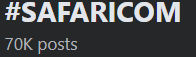
The uproar dominated social media, with the hashtag #Safaricom generating more than 70,000 posts on Facebook alone.
Impact on media
The revelations sparked extensive media coverage and online discussions, questioning Safaricom’s role in breaching customer privacy. Traditional and digital outlets framed it as a test of corporate accountability, while public discourse on platforms like Facebook and X amplified concerns about surveillance, data protection, and the shrinking space for digital freedoms.
3. Nepal Gen Z Uprising
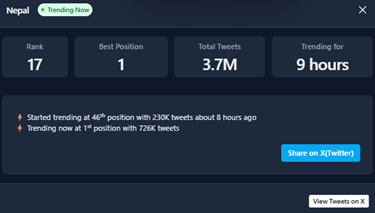
Nepal trended at position 1, amassing 3.7 million tweets after trending for nine hours. The trend was driven by massive youth-led protests in Kathmandu following a government ban on 26 social media platforms. The unrest, fueled by deep frustrations over corruption, unemployment, and inequality, escalated into violent clashes that left over 19 people dead, saw parliament torched, and forced Prime Minister K.P. Sharma Oli to resign. In Kenya, netizens amplified videos of the chaos, especially the burning of government buildings and assaults on politicians, drawing parallels to their own calls for accountability and economic justice. Politicians such as Senator Karungo Thangwa even cautioned local leaders to learn from Nepal’s unrest, with many Kenyans interpreting it as a potential spark for renewed action against corruption at home.
Impact on media
Kenyan media was influenced by the viral Nepal protests to frame local governance and accountability issues in comparative light. By picking up narratives from trending posts, outlets highlighted growing youth discontent and indirectly questioned whether similar unrest could erupt in Kenya.
4.Lawyer Mbobu assassinated
Kenyan lawyer and law lecturer Kyalo Mbobu trended widely on X and TikTok after his assassination in a drive-by shooting in Nairobi’s Karen area, where motorbike assailants sprayed eight bullets into his SUV, killing him instantly. His brutal murder, linked in public speculation to debts worth Sh261 million and ongoing legal battles, sparked outrage and grief, with the Law Society of Kenya holding nationwide purple ribbon marches to protest rising insecurity and impunity. CCTV footage showing how his killers trailed him step by step went viral, amassing over 1M reactions, while TikTok posts with more than 398K reach and 6K reactions saw users question national security, call for stricter vetting of motorcycle use, and debate whether his profession exposed him to scandal cases. Police have since treated the killing as a professional hit, arresting several suspects, including a senior official, by September 12.
Impact on media
The assassination dominated timelines across X and TikTok, where viral footage and speculation shaped public debate. Media outlets picked up these conversations, amplifying citizen concerns on insecurity, the boda boda sector’s reputation, and safety of lawyers, effectively pushing the issue onto the national agenda.