Jubaland, Karura Forest and attempts to impeach Sakaja top online trends
This analysis looks at trending topics between August 28 and September 5 on Facebook and TikTok.
Karura Forest
The Karura Forest saga comprises a series of ongoing issues and controversies surrounding the management, conservation, and governance of the forest, a 1,041-hectare urban forest in Nairobi. In August 2025, the Kenya Forest Service (KFS) moved to centralise all revenue collection for Karura Forest via the e-Citizen platform, eliminating the previous joint management with the Friends of Karura Forest (FKF). This change also came with fee increases—from Sh100 to Sh174 for adults, and from Sh50 to Sh116 for children—now inclusive of VAT and platform charges. FKF raised the alarm, warning that the abrupt shift would strip them of the funds essential for forest maintenance—impacting staff, scouts, cleaners, and conservation programmes. Protests ensued. FKF challenged the move legally, seeking court orders to restore the joint revenue system, stop enforcement of the new payment process, and declare the shift unconstitutional. An urgent hearing is scheduled for September 22, 2025.
These events attracted attention on Facebook pages with more than 21k posts using #Karuraforest during the day of the protest.

Impact on the media
The Karura Forest saga has had a profound impact on the media, transforming it into a critical platform for environmental advocacy, investigative journalism, and public mobilisation. It has elevated environmental issues in Kenya’s public discourse, exposed systemic corruption, and celebrated community-led conservation. However, it has also underscored the need for accurate and responsible reporting, especially in the age of social media. The saga continues to shape media narratives, with ongoing disputes ensuring that Karura remains a focal point for discussions on governance, transparency, and environmental justice. Facebook pages like Citizen TV, The Standard, and The Star dedicated extensive coverage to Karura’s management changes, giving conservation issues prime time attention.
Impeachment attempt against Sakaja
In June 2025, a formal petition was filled at the Narobi County Assembly to initiate impeachment proceedings against Governor Johnson Sakaja. The accusations included alleged constitutional violations, abuse of office, forced evictions, misrepresentation of rent arrears, and use of goons to intimidate residents.
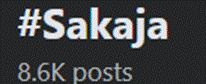
The entire saga was captured on mainstream media Facebook pages and other major bloggers using #Sakaja, with over 8.6k posts
Impact to the media
The media became both a mirror and a guide: reflecting public frustrations, offering analysis, and helping steer the saga from chaos toward constitutional dialogue. Similarly, the media’s role was multifaceted: it acted as a narrator of the drama, an educator on the process, an investigator of the facts, a referee in the political fight, and a fact-checker against misinformation. These roles well performed have left a lasting impression for public trust in both the media and the political class.
Jubaland forces
Mandera Senator Ali Roba raised the alarm, claiming armed Jubaland forces had crossed into Mandera town from Somalia. He warned that schools had closed, businesses shut down, and families displaced amid fears of stray bullets and unexploded ordnance. Residents protested at the BP1 border area, expressing concerns about the presence and demanded government action against the encroachment.
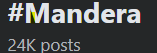
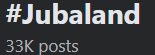
Media outlets took to their Facebook pages, including NTV Kenya, News24, The Standard among others have placed the alleged incursion of Jubaland fighters into Mandera at the centre of national discourse. #Mandera and #Jubaland were mostly used with 24k posts and 33k posts consecutively.
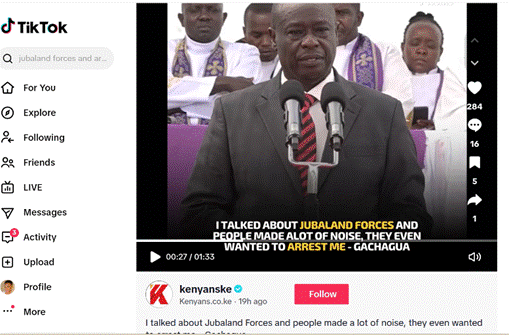
On TikTok the alleged invasion of the armed Jubaland forces in Mandera County trended, gathering more than 233k reach and engagement with some criticising the government for allowing the group in the country questioning the motive behind it, some urged Mandera residents to apply for Ids and vote President William Ruto out in 2027 general elections.
Despite Mandera Governor Mohamed Adan Khalif confirming their presence, Interior CS Kipchumba Murkomen dismissed the claims, assuring Kenyans there was no cause for alarm and faulting political detractors for spreading misinformation to tarnish and undermine President William Ruto’s administration. Some leaders, including Trans Nzoia Governor George Natembeya and Wiper leader Kalonzo Musyoka slammed the government, with DCP party leader Rigathi Gachagua lashing out at the security agencies accusing them of negligence. With over 562K, some supported Gachagua while others criticised him for always faulting the government and advised him to find something better to do. Some leaders including Kiambaa MP Wanjiku John urged Kenyans to calm down cited the government is in control. The public have been sharing unverified videos of alleged Jubaland forces in Kenya with different captions emphasising their presence


Impact on media
The invasion of Mandera County dominated on TikTok with real time updates. This underscores a new reality, that a smartphone and a TikTok account can be as powerful as a newsroom. Tiktok has provided first news, that originates from the public. The downside of this is that the platform could be used as a tool for information warfare. It would be a challenge to verify whether some accounts were organically sharing concerns or there was a coordinated effort to sow disinformation and destabilise the volatile region. The commentaries on the Jubaland forces invasion in Mandera forms the basis for media analysts to consider social media as a new front for geopolitical tensions.