By Kodi Barth
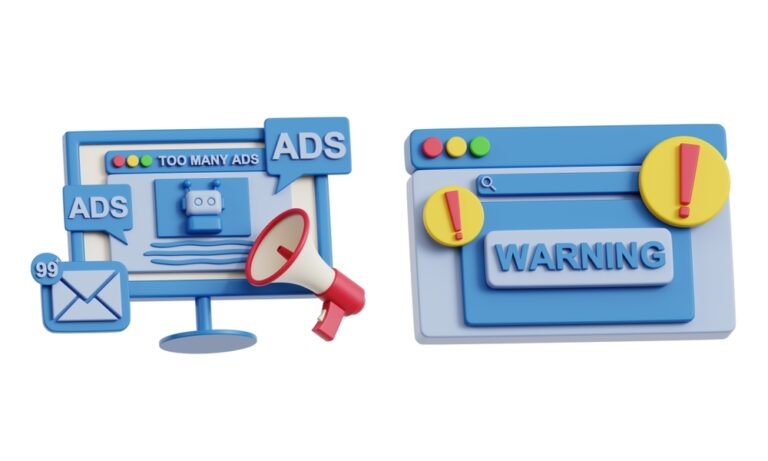
Online advertising on some Kenyan news sites is becoming ridiculous. Nobody can read the news anymore.
We sampled the Daily Nation, Business Daily, The Star, Capital FM, Citizen Digital and People Daily.
On a smartphone, the Sunday Nation of September 12 split the screen into three sections. At the top, about 4cm deep, was a feature: “Solo Lifestyles: Study Reveals Singlehood Benefits.” Under it, a sophisticated-looking woman in a simple beige shirt sipped red wine from a tall, sumptuous glass. A glass, too, can be sumptuous, no?
The middle, about 7.5cm, had just one news headline: “Ruto, Oburu pact faces first major test over 2027 plan”, accompanied by a fitting picture of President William Ruto deep in conversation with a man draped in a Maasai khanga over a navy-blue suit.
At the bottom, another 3.5cm was taken up by a banner counting down to the 2027 elections.
Business Daily, like its mother publication, the Nation, also carved up the screen. At the top, an advert: “TEXTNOW. Wireless Done Differently.”
Then came a decent chunk of news headlines. Except each was premium content — pay to read.
The bottom 4.5cm? Another rotating advert: “WAY TOO SMART TO PAY DUMB. Pay what you want. Or not at all.” We didn’t click.
The Star and Capital FM were ludicrous. Practically the entire screen was blocked by advertising, leaving about 1cm in the middle carrying an obscure headline that you had to wrestle to read.
Citizen Digital was smarter. Clean news from the top. One story. Two. Three. No obstruction. Only as you scrolled further down did a banner finally interrupt: “View ads to continue.”
Now, that felt classier. Easier. More civilised. Right?
Ironically, the People Daily – the only “free newspaper” on the street, whose model depends heavily on advertising – had just one advert at the top.
“Prodenta,” it announced. “One Kitchen Ingredient Removes Tartar From Your Dog’s Gum Line.”
Yeah, that wasn’t for Kenyans. This sampling was done in North America, and digital advertising can be targeted according to location.
But we digress. Newspapers don’t run on Hail Marys. Journalism costs money. Reporters, editors, photographers, technology and everything else that produces the news must be paid for. Advertising helps pay those bills.
The dilemma is how to do journalism that pays without making the journalism impossible to consume. Anyone out there to benchmark?
The Guardian, for example, says it deliberately follows a “fewer, better” approach to display advertising, integrating fewer ads into the reading experience. It has also diversified aggressively into reader contributions and subscriptions. Reader revenue now provides more than half its income, and digital reader revenue rose 17 per cent in its latest financial year.
It even gives readers choices: tolerate advertising and read free, pay for less intrusive advertising, or subscribe for an ad-free experience.
That is the point. The answer isn’t to abandon advertising. Kenyan media houses need every shilling they can earn in a brutal digital market.
But there must be a balance, really. What’s the point of selling advertising by destroying the very product that brought the audience to you?
It’s like grabbing a paper on Kenyatta Avenue. You pay for it, get your change and start reading the cover story. Two sentences in: “Continued on page 3.”
You flip to page 3. And somebody has pasted advertisements over all the stories. Who wouldn’t walk back to the poor vendor and ask for their money back?
Yet, on the phone, apparently, media houses have decided this is normal.